
60 Years Nuclear Accident of Palomares - Lost hydrogen bombs and their consequences
Exactly 60 years ago, on January 17, 1966, one of the worst nuclear accidents of the Cold War occurred in southern Spain. A US tanker plane collided with a B-52 bomber carrying four hydrogen bombs. The planes exploded and fell with their dangerous cargo over the coastal village of Palomares in Andalusia. Two of the four bombs failed to deploy their parachutes. They shattered on impact, contaminating the air and soil around Palomares with plutonium and uranium. The fourth bomb fell into the Mediterranean Sea and was discovered just 80 days later.
A conversation with the Spanish author and documentary filmmaker José Herrera Plaza from Almería. Interview by Norbert Suchanek
Where were you in January 1966, when the hydrogen bombs fell from the sky?
I had just started school in Almería, about 90 kilometers from Palomares. Like most people in Andalusia, I had no idea about the hydrogen bombs flying over our heads.
When and why did you begin your research on the Palomares accident and make it your main focus?
On January 13, 1986, I attended a meeting with the residents of Palomares. It was three days before the 20th anniversary of the accident, and their claims for compensation for health damages were about to expire. I wanted to make a documentary about this little-known, almost unbelievable story, but at that time, all sources for documentary films were classified. I waited 21 years, gathering all available documents, until I was finally able to complete the documentary "Operation Broken Arrow: The Palomares Nuclear Accident."
What does "Operation Broken Arrow" mean?
"Broken Arrow" is an U.S. military code word. It refers to an accidental event that involves nuclear weapons like an accidental or unexplained nuclear explosion or the loss or theft of nuclear bombs.
How did the local authorities react? Were they aware of the plutonium threat?
The local authorities responded to the protocol of an aviation accident without knowing about the involvement of nuclear weapons or the contamination of a large area until several days later.
How and when did the government in Madrid react?
Spanish authorities learned of the crash almost immediately, thanks to alerts sent via emergency channels by a Spanish Navy helicopter. The fact that the plane was carrying four hydrogen bombs was revealed later that same day, thanks to the US ambassador. But both governments involved kept quiet about it until, three days later, the media exposed it to the public.
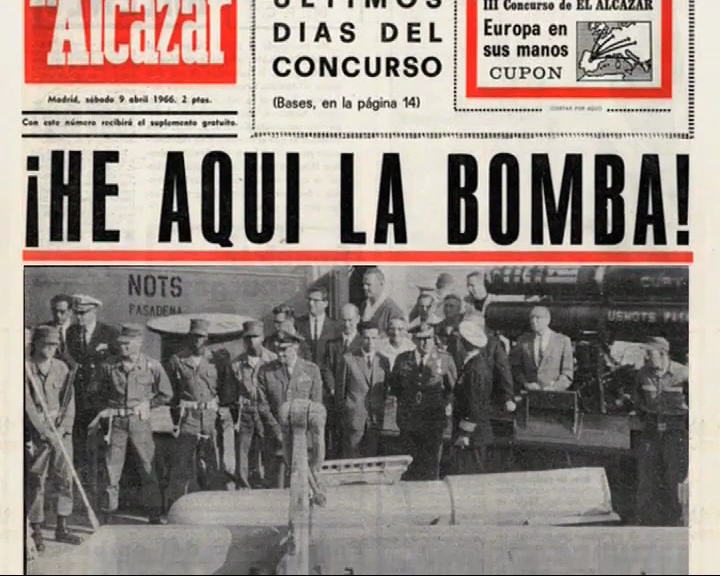
How was it possible that the media reported on this so quickly during the Franco dictatorship?
The Spanish-American journalist André del Amo, from United Press International, was in Palomares two days after the accident and exposed the involvement of nuclear weapons as well as the use of Geiger counters in ground measurements. The following day, his report appeared in major media outlets worldwide. The dictatorship reacted in its usual manner: it confiscated newspapers from newsstands and at the airports in Madrid and Barcelona as soon as international flights landed.
Nevertheless, the residents of Palomares and the rest of Spain learned of the news because, to circumvent the strict media censorship, it was common practice to listen to Spanish-language shortwave broadcasts from Radio Paris, the BBC, and especially Radio España Independiente "La Pirenaica," the station of the Communist Party of Spain, broadcasting from Bucharest, Romania.
What were the direct consequences of the shattered hydrogen bombs? Was there a risk of a nuclear explosion?
The two Mk-28 FI bombs had 68 times the explosive power of the atomic bomb that destroyed Hiroshima. Upon impact at Palomares, the Hydrogen bombs exploded because the conventional explosive charge of the trigger detonated. An area of 635 hectares was subsequently contaminated with fissile fuel: approximately 10 kilograms of plutonium-239 and -241, and slightly more than 10 kilograms of uranium-235 and uranium-238, also known as depleted uranium. While the risk of an accidental nuclear detonation was very low, it did exist. Nevertheless, these hydrogen bombs were among the most technologically advanced in the US arsenal at the time. Their safety systems were quite good, with the exception of the conventional explosive, which was sensitive to shock and vibration. Due to this accident and a similar one two years later in Thule, Greenland, the US military replaced this explosive with a shock- and fire-resistant one.
Was the local population warned about plutonium contamination and the consumption of potentially contaminated food such as tomatoes?
The inhabitants of Palomares were continually and perversely misinformed and thus continued for fifty years, in the Franco dictatorship as well as in democracy. All awareness of their precarious situation was thanks to the banned shortwave stations such as Radio España Independiente "La Pirenaica", and BBC or Radio Paris in their evening programs in Spanish. Also the empathic help of one of the highest members of the Spanish nobility: the Duchess of Medina Sidonia, helped to inform the locals of her situation and rights, for which the fascist dictatorship of Franco put her in prison.
Are there any data or estimates on how many people became ill or died as a result of the contamination with Plutonium or Uranium?
No, because they have never allowed a rigorous epidemiological study to be conducted. When some independent people have tried, it has all been problems. At the same time, the official history created and maintained by the two Governments has stated that there has never been a tumor disease caused by plutonium. Palomares is an environmental sacrifice zone with significant health risks for its inhabitants. But it is not an exception to the rest of the world: invisible minority, invisible consequences.
Did the "nuclear accident" affected the burgeoning tourism industry in the region?
In 1966 tourists visited other parts of Spain, but not that area. The province of Almeria was then very poor and isolated by bad communications. However, the dictatorship was afraid that it could affect tourism in the rest of the country because of the tabloid press, mainly the English one and part of the Italian newspapers. The worst headlines created a newspaper of a young Rupert Murdoch in Australia. His newspaper published that there had been a nuclear detonation, that thousands of people were fleeing and that the entire Spanish Mediterranean was contaminated. That was the reason for the bathing on the beach of Palomares of the Spanish Minister of Information and the US ambassador in front of the press.
The US military conducted a large-scale search and cleanup operation in Palomares. How did the local population react?
The major military deployment had as its primary priority the land and marine search for the missing bomb. The search terrestrial one lasted more than 45 days and that of the sea 80. The second priority was to recover the black box and classified elements of the B-52 like radios and combat folders. The third was to pick up more 125 tons of the remains of the bomber and the tanker to throw them into the Mediterranean, in front of Palomares. Finally, only a symbolic decontamination was carried out for international public opinion.
With the accident there were some local people who were probably affected by post-traumatic stress syndrome, then a collective paranoia took hold of the people, aggravated by the contradictions of the authorities in both countries. The local population suddenly entered the atomic age, trying to understand a new word in their vocabulary: Radioactivity.
Was the military able to remove all the plutonium from the region?
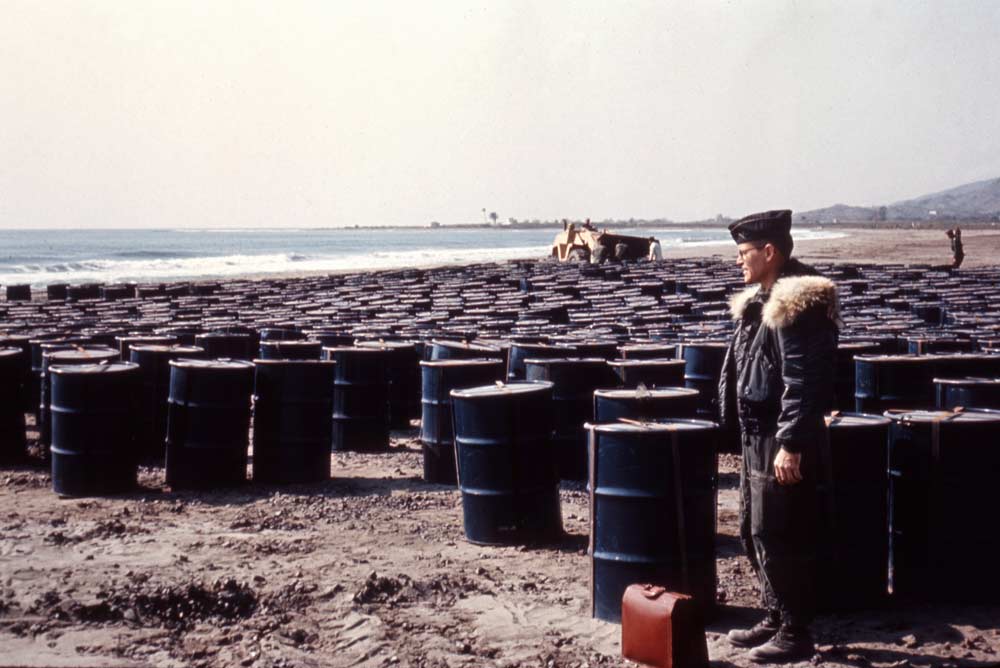
They were able to dispose of all the plutonium they wanted. After lengthy and unequal negotiations between the hegemonic giant and the Franco dictatorship, they agreed to decontaminate and return the plutonium to its country of origin, but they only took 650 cubic meters of contaminated soil and 350 cubic meters of contaminated crops. They did nothing as agreed, because those 1,000 cubic meters of radioactive waste wasn't the most radioactive. It is estimated that less than one percent of the plutonium, less than 100 grams, returned to the US stored in 4,810 barrels. And the still contaminated land was plowed to bury most of the plutonium 30 centimeters deep in agricultural fields. In addition, 40 years later two secret pits were discovered in which 4,000 cubic meters of radioactive waste were buried.
What did they do with the contaminated material in the US? Was it stored in a special nuclear waste repository?
Two barrels were sent to the Los Alamos National Laboratory for plant experiments. 4,808 barrels of contaminated material were shipped to the Savannah River Site of the US Atomic Energy Commission (AEC) in Aiken, South Carolina and buried at a depth of 6 meters. This symbolic gesture was carried out with a whole display of global publicity. However, 99 percent of the plutonium and uranium concealed in Palomares was hidden from public opinion, especially from the inhabitants and farmers who worked those radioactive lands.
The USAF and the Spanish government told them that area had been perfectly decontaminated and that there was no danger. While the US Atomic Energy Commission and the Spanish Junta de Energía Nuclear (JEN) took advantage of the situation to implement a secret human experimentation program to study the human uptake and retention of plutonium and uranium by representative numbers of a population group potentially exposed to the inhalation of plutonium oxide aerosol. This was the secret program codenamed “Indalo Project”, carried out without the informed consent of local population.
What is the situation in Palomares today? Are there still contaminated sites and radioactive hazards in the region?
Despite proclamations by Spain and the USA that there was no longer any danger to farmers and their families, in 1966 ploughing their land with plutonium generated many aerosols which resuspended radioactivity. For 40 years, residents of Palomares were exposed to radionuclides. Only in 2006, the first radiation protection measures for human beings were adopted by restricting agricultural use, access and transit of contaminated land through fencing and signaling of 40 hectares.
Now, in 2026, sixty years later, we are still waiting for the central government of Madrid to decontaminate it. They have never considered it a priority, even though there is documented evidence that more than 210 inhabitants showed symptoms of internal contamination in their lungs. The actual number of people infected is unknown. The political elites and families of central and centralist power live 525 kilometers apart in Madrid.
Why did the B-52 bomber fly over southern Spain with atomic bombs in the first place?
Since January 18, 1961 when Operation Chrome Dome began, four to six strategic bomber flew over Spain, every day, 365 days a year in the outbound and return journeys. During the missile crisis, 42 bombers armed for massive destruction flew each day. These B-52s came from the east coast of the USA, flew through Spanish airspace, approached southern Italy, and returned to their bases through Spain again. Each carried four thermonuclear bombs. If ordered to attack, they could penetrate
and strike their targets in one or two hours at most, depending on whether their target was in the Warsaw Pact countries or the USSR.
For five years until 1966, more than 17,000 bombers had flown over Spain, refueling 26,000 times. No other country in Europe permitted such dangerous maneuvers in its airspace. Nearly 35,000 hydrogen bombs passed over our heads. The Palomares accident and two years later the Thule, Greenland accident occurred because the law of probability was forced.
How are you commemorating the 60th anniversary of this seemingly endless Palomares disaster?
I'm planning a photo exhibition and a panel discussion at the Villaespesa Library in Almería on the topic of "Palomares – 60 Years of Government Failure." I also expect to launch my new book at the end of January. It's titled "The Year of the Bombs: Stories from Palomares“. It brings together the testimonies of 27 Spaniards and Americans who involuntarily participated in the Palomares accident. The book is written in the sub-genre of documentary narrative, like "Voices from Chernobyl" by Svetlana Alekseyevich, a work to which it pays homage. All of this is to prevent the accident of Palomares from being forgotten. The story of Palomares is not over. It continues to be written.
Thank you!
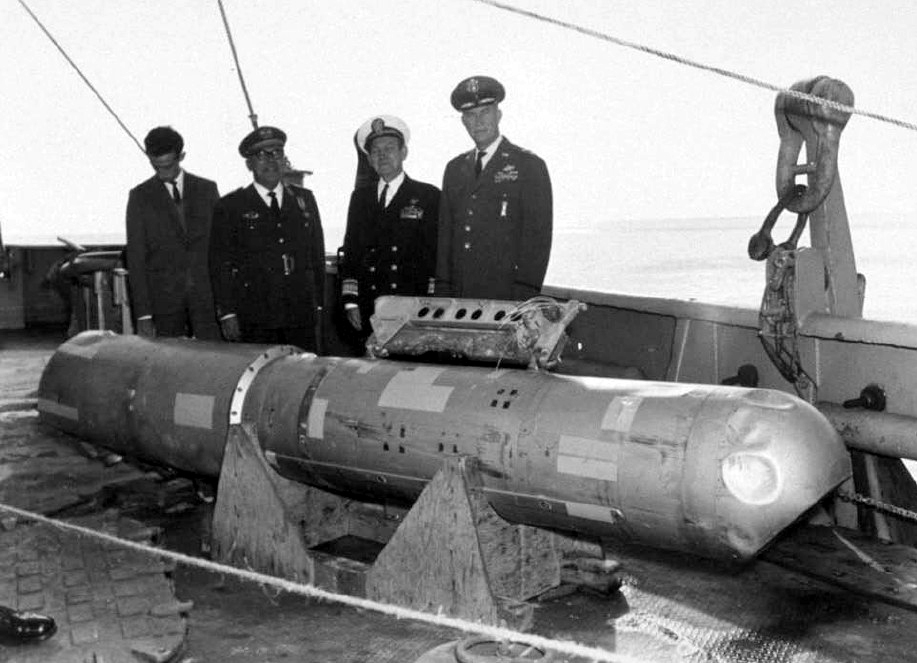 The Palomares Hydrogen Bomb
The hydrogen bomb is essentially a bomb within a bomb within a bomb, based on the fusion of the hydrogen isotopes deuterium and tritium, along with lithium, to form helium. This nuclear fusion requires extreme pressure and high temperatures of approximately 100 million degrees. To generate these temperatures, the Palomares hydrogen bomb uses an atomic bomb as its trigger. This bomb, based on the nuclear fission of plutonium and uranium, is then detonated by the explosion of a conventional chemical explosive.
José Herrera Plaza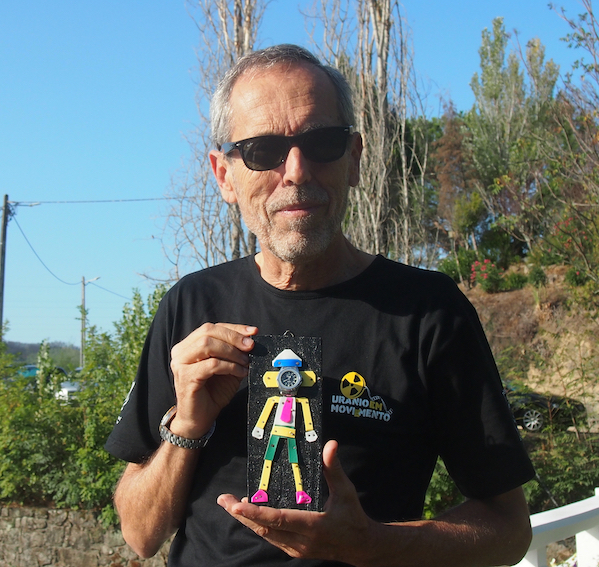
Born in Andalusia in 1955, José Herrera Plaza is a cinematographer, photojournalist, author, and documentary filmmaker. Since 1986, he has researched the Palomares radioactive disaster and wrote the seminal work "The Palomares Nuclear Accident: Consequences (1966–2016)." He is also the co-author of "Silence and Disloyalty: The Palomares Military Accident from the Cold War to the Present Day" and "Operation Broken Arrow: The Palomares Nuclear Accident," and directed the documentary of the same name, released in 2007. In 2019 he received the Honorary Life Time Achievement Award of the International Uranium Film Festival.
Norbert Suchanek 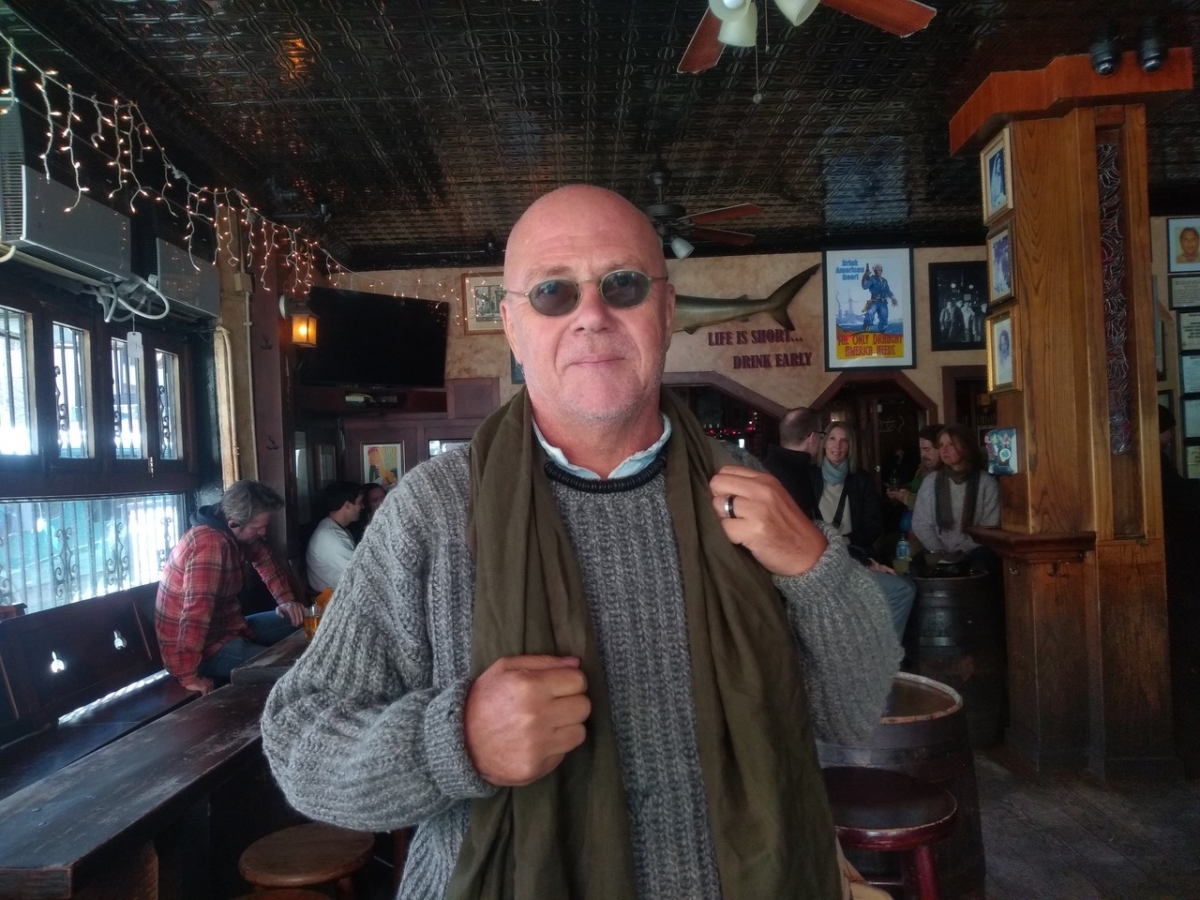
Born in Germany in 1963, Norbert Suchanek is political, environmental and science journalist for about 40 years. In 2010 he created with Márcia Gomes the Oliveira the International Uranium Film Festival. In 2025 the Bavarian journalist and Márcia received the prestigious "Nuclear-Free Future Award" in New York City in the category education.
Films on Palomares
Photo: José Herrera Plaza (left) together with Jaime García Parra on Ipanema beach – part of the "supporting program" of the Rio de Janeiro International Uranium Film Festival in 2022.
Support the Festival
The International Uranium Film Festival needs your support to continue. In 2024 the Uranium Film Festival
was named “One of the 25 Coolest Film Festivals in the World 2024” by MovieMaker Magazine in Hollywood.


Contact
International Uranium Film Festival
Info @ uraniumfilmfestival.org
uraniofestival @ gmail.com